Is Frederick A Remote-Work Friendly Place To Live?
June 4, 2026
June 4, 2026
Remote work changed what many buyers want from home. If you are thinking about Frederick, you are probably asking a practical question: can you build a comfortable work-from-home routine here and still enjoy daily life? The short answer is yes, for many buyers, but the best fit depends on how much space, walkability, and commute flexibility you need. Let’s dive in.
Frederick is a solid option if you want a small-city feel with access to the surrounding county. In the 2024 American Community Survey, 16.4% of Frederick city workers and 17.9% of Frederick County workers worked from home. That tells you remote and hybrid work are common enough here to feel normal, not unusual.
At the same time, Frederick is not a transit-first place where most people rely on rail or buses every day. Mean travel times were 31.0 minutes in the city and 34.1 minutes in the county, and about two-thirds of workers in both areas still drove alone to work. If you are considering Frederick, it helps to think of it as remote-work friendly, but still largely car-oriented outside the most walkable areas.
Downtown Frederick is a big reason many buyers look here. Official city and downtown sources describe a historic downtown with restaurants, local businesses, arts venues, public art, and Carroll Creek Park. The Maryland State Arts Council also identifies Downtown Frederick as a walkable Arts & Entertainment District.
That matters when you work from home. It gives you places to step out for lunch, meet a client or colleague, run errands, or simply break up the day without needing a major drive. Downtown Frederick Partnership says there are more than 250 small, locally owned businesses downtown, which adds to that everyday convenience.
Remote work is not just about your desk setup. It is also about how easy it is to reset during the day or after work. Carroll Creek Linear Park includes walking and biking paths, and Frederick’s park system gives residents simple options for movement and fresh air close to home.
For many buyers, that lifestyle piece is just as important as the house itself. If you like the idea of a midday walk or an easy after-hours outing, Frederick offers that in a practical way.
Frederick is also positioned as the northern anchor of the I-270 Technology Corridor. For buyers who do not need to be in an office every day, that can be a strong middle ground. You can live outside Washington while still keeping regional job access in the picture.
One of the biggest decisions is whether you want the city of Frederick itself or a home elsewhere in Frederick County. Both can work well for remote living, but they offer different tradeoffs.
If you want to be closer to downtown amenities, the city may be more appealing. The city has a denser pattern of housing and daily destinations, which can make it easier to enjoy cafés, shops, parks, and errands without getting in the car every time.
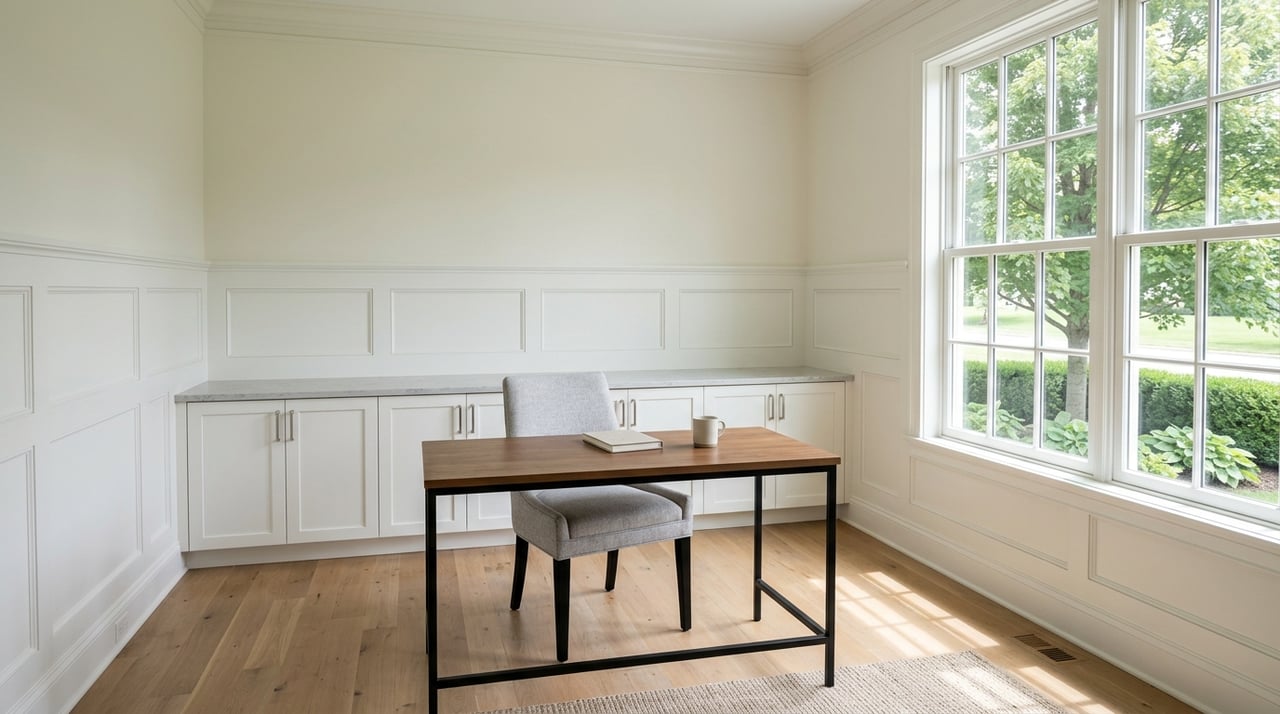
But that convenience often comes with less space. In the city, the 2024 ACS shows a 5.7-room median, 31.8% detached homes, and 8.0% of homes with 5 or more bedrooms. If your ideal setup includes a dedicated office, guest room, gym, or separate flex space, that may take more searching.
If space is your top priority, the county is often the stronger fit. Frederick County has a 6.7-room median, 59.2% detached homes, and 11.7% of homes with 5 or more bedrooms. For remote workers, that usually means better odds of finding a true home office, bonus room, or quieter separation between work and home life.
The county also has a higher owner-occupied rate at 75.9%, compared with 55.8% in the city. For buyers who are moving up, relocating, or looking for a longer-term home base, that larger-home inventory can be especially appealing.
There is a cost tradeoff. Frederick County’s median owner-occupied home value is $503,700, compared with $453,600 in Frederick city. In simple terms, if you want more square footage and more office-ready flexibility, you will often pay more on average.
That does not make one choice better than the other. It just means your priorities should lead the decision. If you value walkability and downtown access, the city may win. If you value extra rooms and a quieter work setup, the county may be the better match.
If you work from home most days but still commute sometimes, Frederick gives you several ways to manage hybrid life. The key is to set expectations correctly.
The MARC Brunswick Line extends to Frederick and continues through the Washington corridor, including Silver Spring, Rockville, and Gaithersburg. Frederick station offers weekday commuter rail and connects with county transit and commuter bus service.
That can be useful if your office schedule is predictable. The MARC timetable includes morning outbound service toward Union Station, which supports planned hybrid commuting. But it is not the same as all-day rapid transit, so it works better for set office days than for spontaneous back-and-forth travel.
Frederick County Transit lists MARC, MTA commuter buses to Shady Grove and College Park, Metrobus and Metrorail connections, and regional park-and-ride options. The county also says local transit is free and includes 9 connector routes, commuter shuttles, and Meet-the-MARC shuttles.
These options give hybrid workers more flexibility, especially if you want alternatives to driving every single time. Still, most workers here continue to drive alone, so it is smart to build your home search around your actual commute habits, not an idealized version of them.
For remote buyers, broadband should be one of the first property-level questions you ask. The ACS 2020-2024 reports broadband subscriptions in 92.7% of Frederick city households and 93.2% of county households. On the surface, those numbers are encouraging.
But property location matters. Frederick County says most residents have broadband access through Comcast, while more rural areas are generally unserved and wireless service can be limited by landscape and tree cover. If you are looking at rural homes, larger parcels, or acreage, do not assume the internet will support your work setup just because the house looks perfect.
In practical terms, close-in city and suburban addresses are usually safer bets for remote work. Rural properties can still be attractive, especially if you want more land or privacy, but they require careful verification before you close.
If Frederick is on your list, these are the details worth focusing on during your search:
These priorities can help you narrow your search quickly. They also help you avoid buying a home that looks great on paper but does not work well for your weekday routine.
Yes, Frederick is remote-work friendly for many buyers, especially if you want a small-city base with real downtown life, practical hybrid commute options, and the chance to find a larger home in the county. It is a strong fit if you want more room than you may find closer to Washington, while still keeping regional access in play.
It may be less ideal if you want transit to handle most of your daily movement or if you are shopping in rural areas without confirming broadband first. In other words, Frederick works best when your home search matches how you actually live and work.
If you are comparing Frederick city with the surrounding county, a local perspective can make the decision much clearer. James E Brown can help you weigh space, commute patterns, and property-level details so you can find a home that supports both your workday and your long-term goals.


Jim Brown is dedicated to helping you find your dream home and assisting with any selling needs you may have. Contact Jim today to start your home searching journey!