Buying Near The Agricultural Reserve In Barnesville
May 21, 2026
May 21, 2026
Wondering what it really means to buy a home near the Agricultural Reserve in Barnesville? You are not alone. This area offers space, scenery, and a rural setting that draws buyers from across Montgomery County and beyond, but it also comes with rules and property details that matter more here than in a typical subdivision. If you are considering a home in or around Barnesville, this guide will help you understand the big factors before you make a move. Let’s dive in.
Barnesville sits within a very specific rural planning setting in Montgomery County. The town’s master plan describes Barnesville as a small rural village with minor commercial activity, and it states that the Montgomery County Agricultural Reserve completely surrounds the town.
That setting shapes almost everything about the buying experience. The Agricultural Reserve was created in 1980 and covers 93,000 acres. Montgomery County describes it as a working landscape that supports agriculture, scenic views, bike routes, farms, and outdoor recreation.
For many buyers, that is exactly the appeal. You are not just buying a house. You are buying into a landscape that has been intentionally preserved for open space, farming, and a slower rural rhythm.
The biggest thing to understand is that land near Barnesville does not always function like land in more suburban parts of Montgomery County. In much of the Agricultural Reserve, property is primarily zoned for agriculture with a density limit of one house per 25 acres.
That does not mean every large parcel can be split or developed the way a buyer might expect. Montgomery County preservation programs have protected more than 70,000 acres of agricultural land, and some preserved properties have easements that prevent future commercial, residential, or industrial development.
This is why two nearby properties with similar acreage can have very different long-term potential. One parcel may be relatively straightforward for residential use, while another may be affected by preservation restrictions, transferred development rights, or other limits tied to the land.
One of the first questions to answer is whether a property is inside the Town of Barnesville or outside it in the surrounding Agricultural Reserve. That distinction affects zoning, approvals, and what you may be able to do with the property.
Within town, Barnesville is mostly zoned R-A. For new residences in that zone, the town plan calls for a 4-acre minimum lot size and 150 feet of frontage on a publicly maintained road for subdivision lots.
The town also notes that some older lots near the center of Barnesville are smaller than today’s minimum requirements. Those lots are considered nonconforming because they were created before current standards were in place.
Barnesville also has its own municipal authority over zoning, subdivision, forest conservation, and building permits. At the same time, county permits still apply for items like engineering, plumbing, electrical work, wells, and septic systems.
If you are shopping in Barnesville, expect a housing stock that looks different from a newer planned neighborhood. The town plan reports that all housing units were single-family homes and describes a mix of older farmhouse, Victorian, rambler, and other home styles.
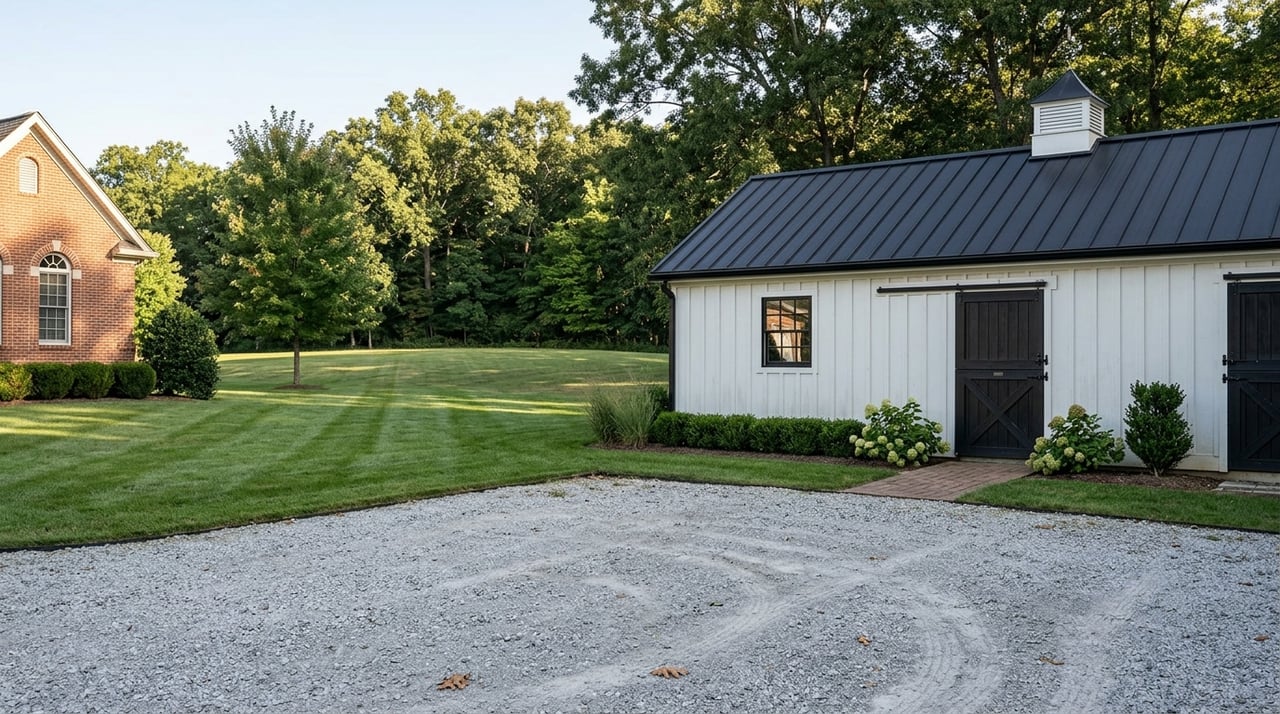
You will also see many properties with accessory buildings. Barns, sheds, workshops, studios, garages, and animal shelters are common features in the area.
Larger parcels are often found near the edges of town, especially around West Harris Road and along the southern and northern edges near Beallsville Road and Old Hundred Road. The plan also notes agricultural-related uses in these areas, including horse boarding, training, and riding lessons.
In Barnesville, utility questions are not a minor detail. They are central to how a property works. The town does not have public water or sewer service, and neither the town nor WSSC plans to extend public mains to the town limits.
That means rural properties here usually rely on private onsite wells and septic systems. If you are used to suburban homes with public utilities, this is one of the biggest mindset shifts when buying in the area.
Because of that, you should look closely at how the property is served today and what that means for future changes. If you are buying a vacant lot or considering an addition, utility feasibility can shape what is possible.
In Barnesville, septic is often one of the most important due-diligence items. The town plan says a new home in the R-A zone must have enough land for a primary drainage field plus three backup fields, with septic systems located more than 100 feet from wells.
That is a major requirement, and it helps explain why further subdivision can be difficult in this area. The same plan points to soil conditions and septic constraints as key barriers to additional lot creation.
For buyers, the takeaway is simple: do not assume acreage alone tells you what a parcel can support. A property may look large enough on paper, but actual usability depends on approved well and septic conditions, lot configuration, and site-specific constraints.
A scenic, protected landscape is a big reason many people want to live near Barnesville. It is also why buyers need to review easements and restrictions carefully.
Barnesville’s planning framework places real value on views of Sugarloaf Mountain, fields, forests, and pastures. The town plan says subdivision review considers how new construction affects those views.
Tree preservation can also limit changes to a property. Barnesville’s forest conservation rules apply to development and certain tree disturbance, and perpetual forest conservation easements may restrict vegetation removal or other changes to the natural character of the land.
There are also county preservation tools that can affect future use and resale. For example, Building Lot Termination easements in the Agricultural Reserve permanently restrict non-agricultural uses on eligible land and are intended to reduce fragmentation of farmland and lower residential development potential.
Buying near the Agricultural Reserve also means paying attention to roads and access. Barnesville’s roads are rural and mostly residential, and the town notes that West Harris Road is partly paved and partly gravel.
The area’s road network is part of its rural character. Barnesville Road, Beallsville Road, and Old Hundred Road are listed in county rustic roads materials as roads recommended to be rustic or exceptional rustic.
That can be part of the charm, but it also affects daily driving and property access. If commute patterns, driveway conditions, frontage, or road maintenance matter to you, those are worth evaluating early in the search.
For many buyers, the lifestyle around Barnesville is just as important as the home itself. County planning materials highlight farms, wineries, bike routes, pick-your-own operations, and scenic vistas throughout the Agricultural Reserve.
Barnesville’s master plan also points to nearby destinations and outdoor resources like Sugarloaf Mountain, the C&O Canal, the Monocacy and Potomac Rivers, and county equestrian parks. If you want room to breathe and easy access to outdoor recreation, that is a major reason this area stands out.
This does not mean every property will offer the same experience. Some buyers want a village setting close to the center of town, while others want a larger parcel with a more agricultural or equestrian feel.
Before you move forward on a home or parcel near the Agricultural Reserve, focus on these questions:
These questions are especially important if you are buying land, buying an older home with acreage, or planning renovations after closing.
A Barnesville-area purchase often involves more moving parts than a standard home search. You may need to sort through town rules, county approvals, septic feasibility, preservation issues, and the practical realities of rural property ownership.
That is why local knowledge matters so much here. When you understand the difference between a property that simply looks appealing and one that truly fits your goals, you can make a more confident decision.
If you are thinking about buying near the Agricultural Reserve in Barnesville, working with someone who understands acreage, rural property questions, and the upcounty Montgomery County market can help you avoid surprises and focus on the right opportunities. When you are ready to talk through your options, connect with James E Brown.
Jim Brown is dedicated to helping you find your dream home and assisting with any selling needs you may have. Contact Jim today to start your home searching journey!